
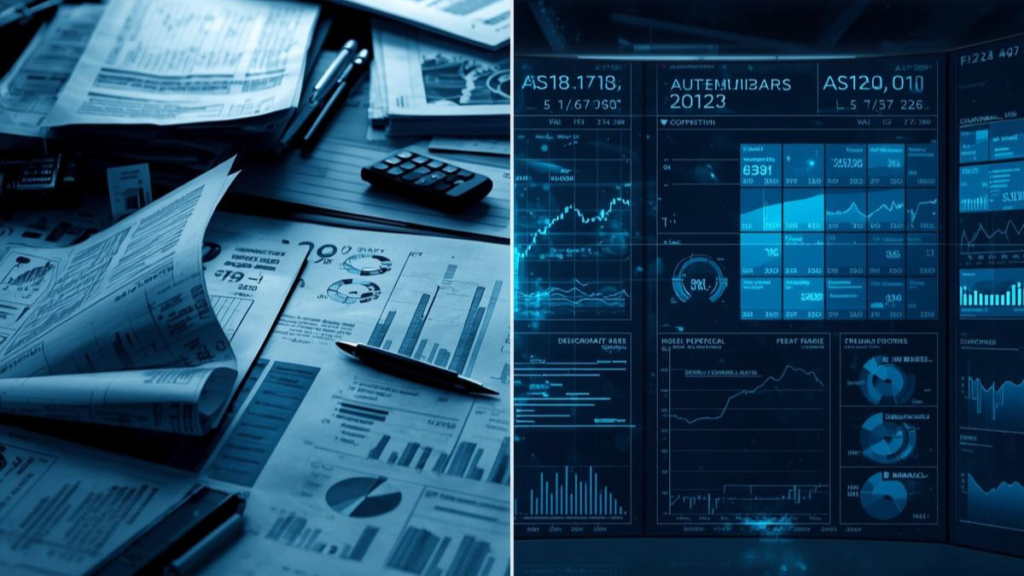
Manual workflows remain embedded across many investment operations and reconciliation environments, often viewed as a cost of doing business. In reality, they represent a growing source of operational risk, inefficiency, and scalability constraints.
Processes such as trade handling, cash reconciliation, and pricing validation, when executed manually, introduce a higher probability of human error. A 2024 report by PwC highlights that reliance on manual processes increases the likelihood of data inconsistencies and reporting inaccuracies, particularly in high-volume financial environments. These issues can lead to reconciliation breaks, delayed close cycles, and potential compliance exposure.
Efficiency losses are equally significant. According to Capgemini (2023), organizations dependent on manual operations face slower processing times and limited visibility into workflows, reducing their ability to respond to time-sensitive market demands. In reconciliation functions, this often translates into prolonged issue resolution and increased operational overhead.
Perhaps most critically, manual workflows hinder scalability. As firms grow and transaction volumes increase, these processes become bottlenecks. Gartner notes that organizations lacking automation struggle to scale efficiently, driving up costs while limiting agility.
Manual operations are no longer sustainable in modern financial environments. Firms that modernize workflows gain not only efficiency, but control, accuracy, and long-term resilience.
Let’s optimize your workflow.